Built for the outdoors.
Considered in every layer.
From the steel you touch to the mechanism that opens the day. Take a closer look at the materials and construction behind a CaliPod kitchen.
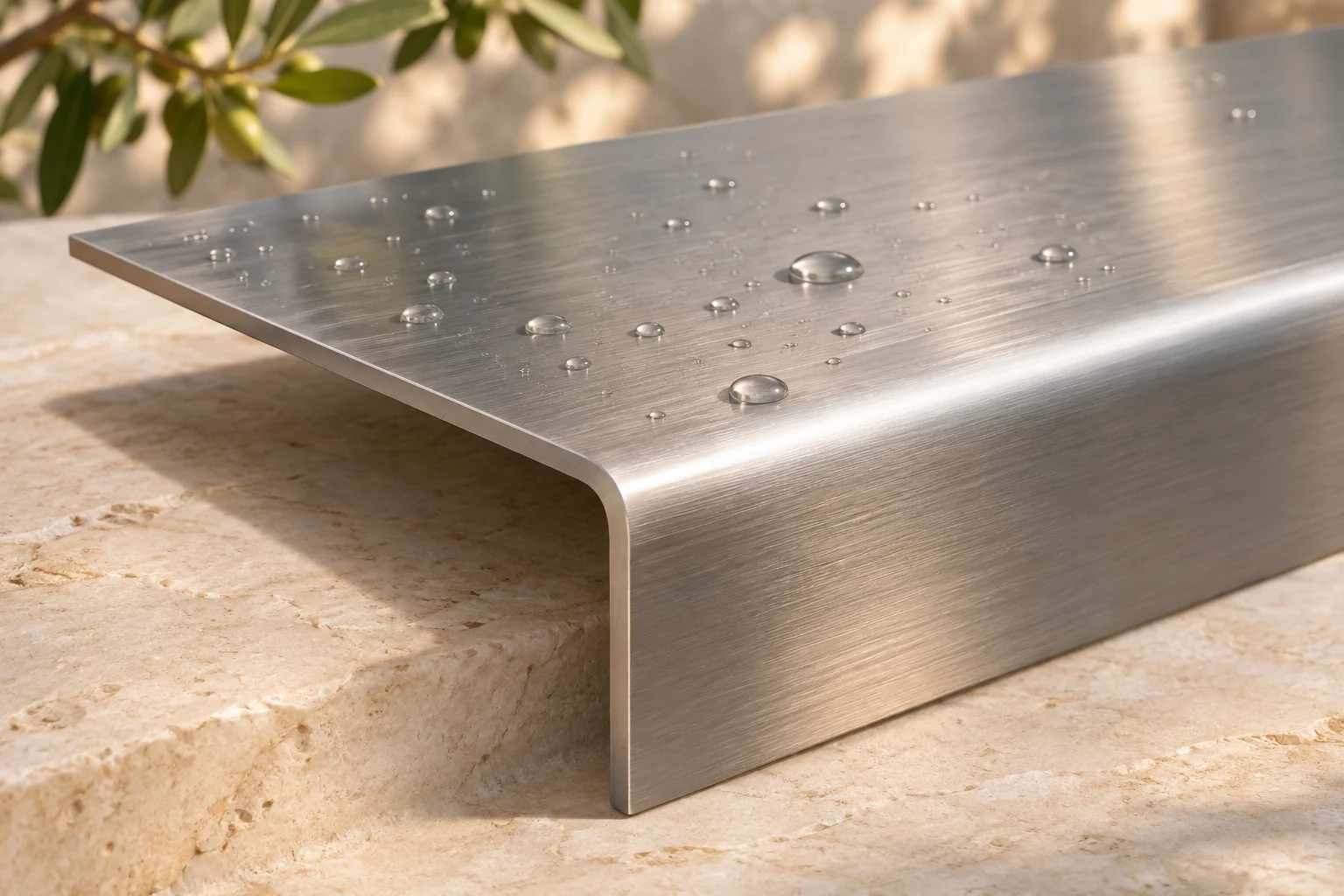
304 stainless steel.
Strength and corrosion resistance for everyday outdoor cooking.
304 stainless steel combines structural strength with corrosion resistance. Its chromium-rich passive surface helps protect the metal during everyday outdoor use, while a brushed finish brings a clean, understated look to the kitchen.
Regular cleaning matters, especially around salt air, pools and coastal settings. Stainless steel is corrosion resistant, rather than maintenance free.
Why the steel grade matters
Alloys behave differently outdoors. The grade, finish, environment and care routine all influence long-term performance.
| Material | Outdoor considerations |
|---|---|
| 304 stainless steel | Generally offers better corrosion resistance than 201 stainless steel. Clean regularly, particularly after salt or chlorine exposure. |
| 201 stainless steel | A lower-nickel stainless grade whose corrosion resistance can be more limited in demanding outdoor conditions. |
| Aluminum | A lightweight, corrosion-resistant metal. Strength and surface performance depend on the alloy, coating and construction. |
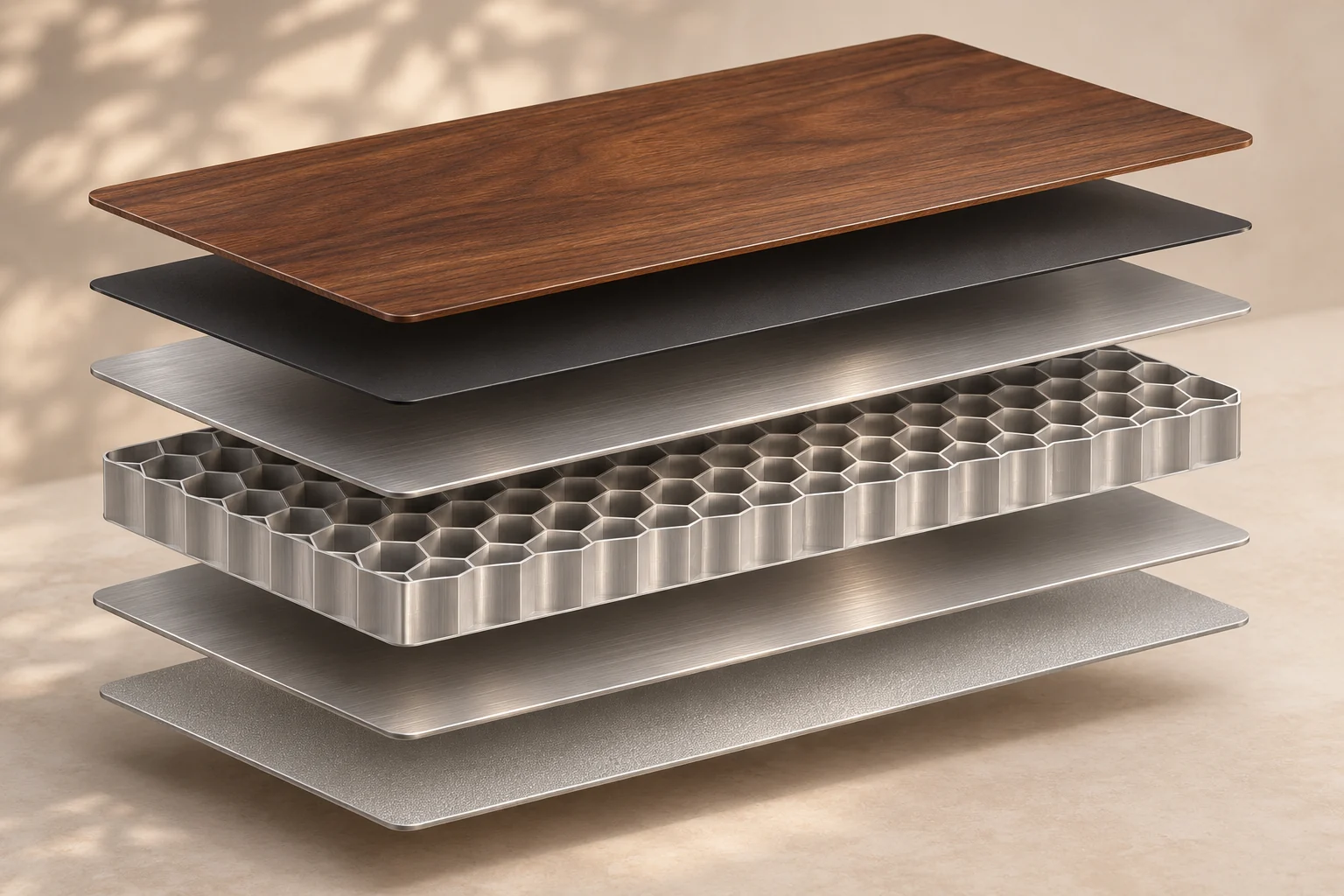
Strength in every layer.
A metal door with more to it than its surface.
Layered door construction brings stainless-steel skins, an aluminum honeycomb core and finish layers together. The honeycomb structure adds rigidity while keeping the panel lighter than a solid metal construction of the same thickness.
Wood-look finishes bring the warmth of a grain pattern to a metal panel. Exterior and cabinet colors can be selected separately in the configurator.
Explore the panel layers
Decorative face
The selected exterior color or wood-look finish.
Base coat
A prepared foundation for the decorative finish.
Protective steel skin
A stainless-steel layer beneath the surface.
Honeycomb core
A lightweight aluminum structure that helps the panel retain its shape.
Steel backing
A stainless-steel base layer supporting the panel assembly.
Textured surface
A fine stainless-steel surface texture on the backing face.
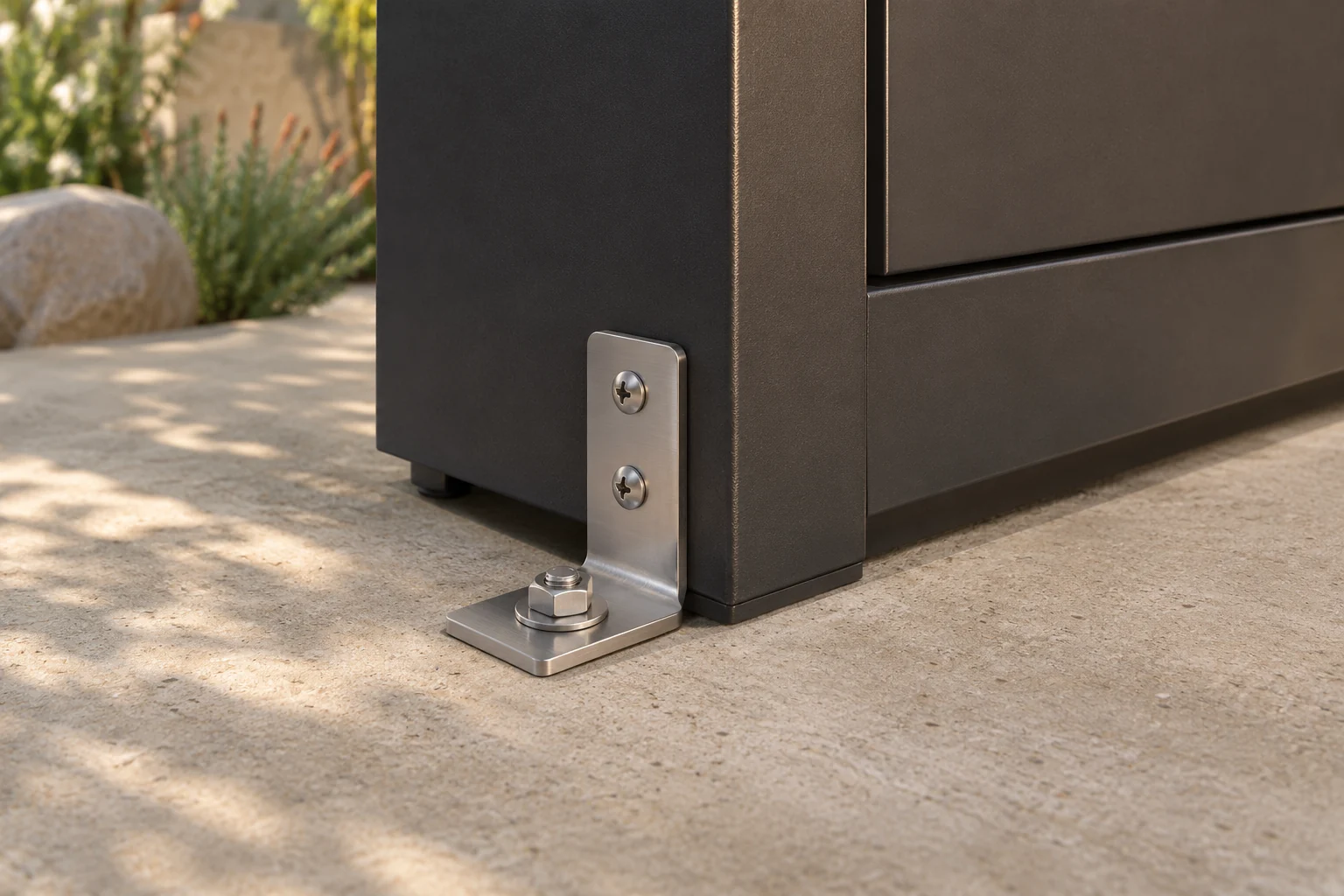
Grounded in the details.
Stability starts beneath the kitchen.
Ground-fixing points at the four corners allow the pod to be secured to a suitable base. Anchoring connects the structure to its foundation and helps resist movement once the kitchen is in place.
The installer reviews the supporting surface, fixing method and local site conditions. A level, suitable foundation and the right anchors are part of planning a lasting installation.
Before installation
- Review the base material, level and load-bearing capacity.
- Confirm the anchor type, placement and utility routes with the installer.
- Allow space for the open cover, ventilation, operation and access.
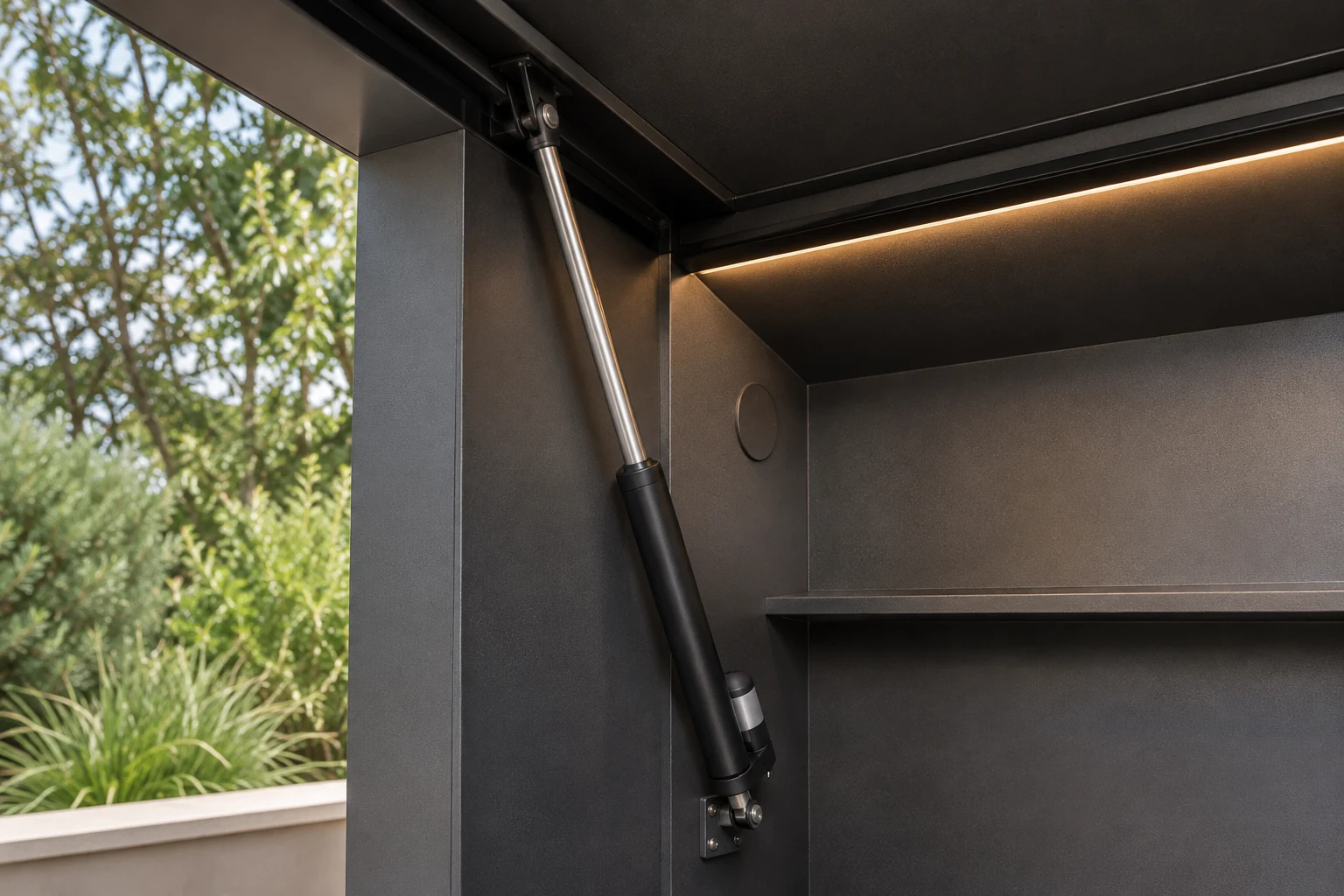
Electric opening. Controlled movement.
A screw-driven mechanism brings the cover into position.
An electric motor turns a threaded lead screw inside the linear actuator. That rotation becomes the controlled linear movement that raises and lowers the cover. Remote operation makes opening and closing part of the everyday routine.
Mini Plus and Standard lift a full-height front into an overhead cover. Compact Pod opens its lower-profile upper shell. Keep the movement area clear and follow the operating instructions for the selected model.
Closing up after cooking
Allow equipment to cool before closing, following the appliance instructions. The closed enclosure helps reduce exposure to dust, leaves and everyday outdoor debris. Keep the cover closed during strong winds and inspect moving hardware as part of routine care.
Illustrations explain construction concepts. Panel finishes, fixing hardware and lift details vary with the selected model and installation.
A durable foundation.
Your own expression.
Choose exterior and cabinet colors, textured or wood-look finishes, and a stainless-steel or sintered-stone worktop. See your combination come together in the configurator.
Explore your finishesReady for the next
day outside.
Clean surfaces with fresh water, a mild detergent and a soft cloth. Rinse away salt and pool splash, then dry the surface. Avoid abrasive pads and chlorine-based cleaners, and follow the care instructions for your selected finish.
Use heat protection for hot cookware, keep ventilation paths clear, and include seals, fixings and moving parts in routine checks.
Talk through your setting